The modern food delivery economy has tested virtually every cuisine and format against the demands of transit. Pizza, sushi, ramen, tacos, burgers, salads — all have been boxed, bagged, and dispatched across Atlanta's streets to varying degrees of success. Yet sandwiches have emerged as the consistently top-performing delivery category across nearly every urban market in the country. This isn't coincidence or cultural preference alone. There are deep structural, practical, and culinary reasons why the sandwich is uniquely suited to fast delivery — and understanding them helps explain why Atlanta's fastest-growing delivery segment continues to be built around this centuries-old format.
The Structural Advantage: Built to Travel
Before examining anything else, consider what a sandwich fundamentally is: a portable food format invented long before food delivery existed, specifically to allow food to be carried, held, and consumed without utensils, plates, or a fixed dining environment. The Earl of Sandwich reportedly popularized the format in 18th-century England as a way to eat without leaving the card table. The core design principle — filling enclosed within a bread structure that can be handled directly — makes the sandwich perhaps the most delivery-native food format ever created.
The bread exterior functions as both container and structural support. When properly selected and toasted, it creates a moisture barrier that protects fillings from condensation and ambient humidity during transit. This is a critical advantage over other delivery food formats. Consider the alternatives: pasta dishes in their sauces become heavy and gummy; rice-based meals lose texture and become dense; salads wilt rapidly; fried foods lose their crunch within minutes of boxing. The sandwich, by contrast, maintains its structural integrity through 20–30 minutes of transit — precisely the window that defines Atlanta's average delivery time.
The self-contained nature of a well-built sandwich also eliminates one of delivery's most common quality problems: component separation. A curry can separate from its rice. A deconstructed salad can become a single wet mass. But a sandwich, when properly layered and packaged, arrives as a unified, cohesive eating experience. Skilled delivery kitchens enhance this further by applying a deliberate layering sequence — bread, dressings applied directly to bread rather than fillings, proteins at the center, vegetables on top — that optimizes both structure and moisture distribution across the transit window.
Key Insight: The sandwich format was designed for portability centuries before food delivery existed. Its structural properties happen to align almost perfectly with the requirements of modern urban delivery.
Preparation Speed: Faster than Every Alternative
Among all food formats that deliver satisfying, complete meal experiences, sandwiches have the shortest average preparation time by a significant margin. The preparation of a quality sandwich involves no cooking from scratch (for most cold variants), no multiple-component assembly from raw ingredients requiring heat, and no plating or presentation steps. For grab-and-go sandwich operations, preparation has been reduced to near zero — ingredients are pre-prepped in bulk, assembled during quiet periods, and staged for instant dispatch.
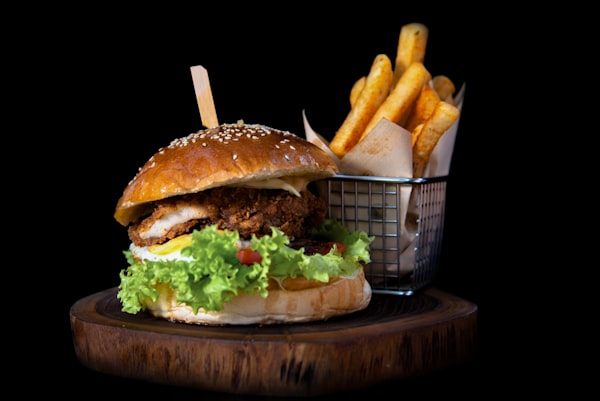
Compare this to a comparable delivery experience from other categories. A quality pasta dish requires boiling, sauce preparation, and plating — 18–25 minutes minimum. A grilled protein bowl requires marination, grill time, and assembly — often 20+ minutes. A quality burger, while relatively fast, requires grill time and a bun that softens under steam within 15 minutes of boxing. The quick lunch sandwich category averages 10–14 minutes of preparation time; grab-and-go options average 2–5 minutes. No other food category that produces genuine meal satisfaction can match these figures consistently.
This preparation speed advantage compounds at scale. During Atlanta's peak lunch hours, when delivery kitchens are handling dozens of simultaneous orders, faster preparation cycles mean shorter kitchen queues for every order behind yours. A restaurant specializing in sandwiches can turn over orders three to four times faster than a kitchen producing equivalent-calorie hot meals from other categories. That throughput advantage directly translates to shorter wait times for customers throughout the delivery window.
Temperature Tolerance: A Critical Delivery Factor
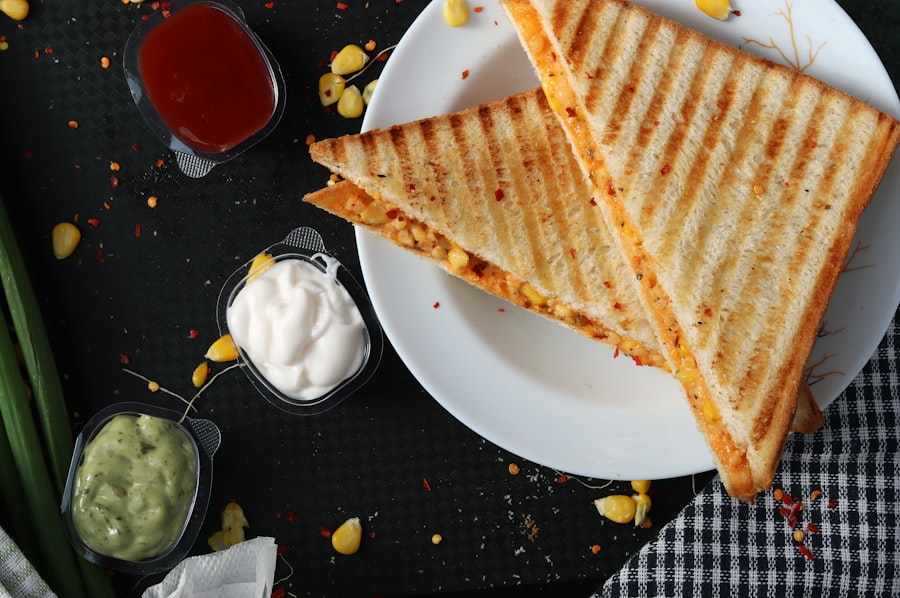
One of the most underappreciated advantages of sandwiches in the delivery context is their temperature tolerance range. Unlike most hot food categories that degrade rapidly below their optimal serving temperature, sandwiches are inherently format-flexible across a broad temperature spectrum. Cold sandwiches are designed to be served at or near refrigerator temperature and remain excellent through extended transit. Hot sandwiches, such as paninis and meatball subs, tolerate temperature drop better than most hot alternatives because their bread exterior insulates the filling and maintains sensory quality longer than, say, a plate of hot rice or a hot soup.
This temperature flexibility means that sandwiches maintain quality across the full range of Atlanta delivery scenarios — short 12-minute urban core deliveries and longer 30-minute suburban routes, summer heat and winter cold, fast drivers and slow ones. The quality variance between ideal and real-world delivery conditions is smaller for sandwiches than for any other significant food category. This reliability is a core reason why sandwich delivery consistently generates higher customer satisfaction scores than delivery of hot food categories like pasta, fried items, or soup-based dishes.
Packaging Efficiency and Delivery Compatibility
Sandwiches are among the most packaging-efficient foods in the delivery ecosystem. A standard sandwich fits into a compact box or wrap that takes up minimal space in a delivery bag, allows efficient stacking of multiple orders, and generates significantly less packaging waste than multi-component meal kits. This packaging efficiency benefits both drivers and customers: drivers can carry more orders per run, reducing per-order delivery costs and improving platform economics; customers receive their food in packaging that opens cleanly, doesn't require assembly, and can be disposed of or recycled simply.
The compact packaging profile also improves thermal stability during transit. A smaller, more fully packed delivery bag maintains temperature more effectively than a large bag with airspace around a single container. For hot sandwiches specifically, the tight packaging creates a micro-insulation environment that meaningfully extends the window during which the sandwich arrives at proper serving temperature.
Atlanta's delivery platform operators have noted that sandwich orders generate fewer support contacts related to packaging failures — spills, container collapses, and sogginess complaints — than most other food categories. This reliability in the packaging and transit phase is a meaningful quality indicator that reflects the inherent delivery compatibility of the sandwich format itself.
Dietary Range and Menu Depth
Unlike more specialized food categories, sandwiches encompass an enormous range of dietary preferences, restrictions, and nutritional goals within a single category. This breadth means that a single sandwich delivery kitchen can serve vegetarians, carnivores, high-protein seekers, calorie-conscious eaters, dairy-free customers, and gluten-free customers (with appropriate bread alternatives) — often from the same core ingredient inventory. This versatility reduces the number of separate restaurants users need to track and rotate across their delivery routine.
For Atlanta's diverse professional workforce, this dietary range is practically significant. A team ordering lunch together — with its inevitable mix of dietary preferences and restrictions — can often be served entirely from a single high-quality sandwich kitchen, simplifying the group ordering process and reducing the coordination overhead that makes team lunches logistically challenging.
The nutritional scalability of sandwiches is also notable. The same basic format can be calibrated from a 300-calorie light lunch to a 900-calorie post-workout meal simply by adjusting portion sizes, bread choice, and ingredient selection. This makes sandwiches one of the few delivery categories that genuinely serves the full spectrum of nutritional needs without requiring separate menu sections or specialty menus.
Consumption Convenience: The Last Mile of Satisfaction
The delivery experience doesn't end when the driver hands you the bag — it ends when you finish eating. Sandwiches have a decisive advantage in this final phase as well. They require no utensils, no transfer to serving dishes, no reheating steps, and no assembly. The sandwich arrives ready to eat, unwrapped in seconds, and consumed cleanly from its packaging. This convenience is particularly meaningful for the most common Atlanta delivery scenario: eating at a desk, in a meeting room, at a job site, or in a vehicle.
The ergonomics of sandwich consumption — held in two hands, progressing from one end to the other, generating minimal mess when properly wrapped — make it uniquely compatible with busy environments. You can eat a quality sandwich while reviewing documents, having a phone conversation, or monitoring work applications without the full attention demands that meals requiring utensils impose. In Atlanta's high-demand professional environment, this consumption efficiency is a genuine quality-of-life advantage that compounds across every lunch hour of a working year.
The Verdict: Sandwiches Win on Every Delivery Metric
Across every dimension that determines delivery success — preparation speed, structural integrity during transit, temperature tolerance, packaging efficiency, dietary range, and consumption convenience — sandwiches perform at the top of their category. No single food format combines all these advantages as effectively as the sandwich. This is why Atlanta's fastest-growing delivery operations are disproportionately sandwich-focused, and why delivery platforms consistently report higher reorder rates for sandwich categories than for most alternatives.
For Atlanta consumers seeking the most reliable, efficient, and satisfying delivery experience available, the conclusion is clear: when speed, quality, and consistency matter, the sandwich is the right choice. Our category guides and ordering resources are built to help you navigate Atlanta's sandwich delivery landscape with exactly this understanding in mind.